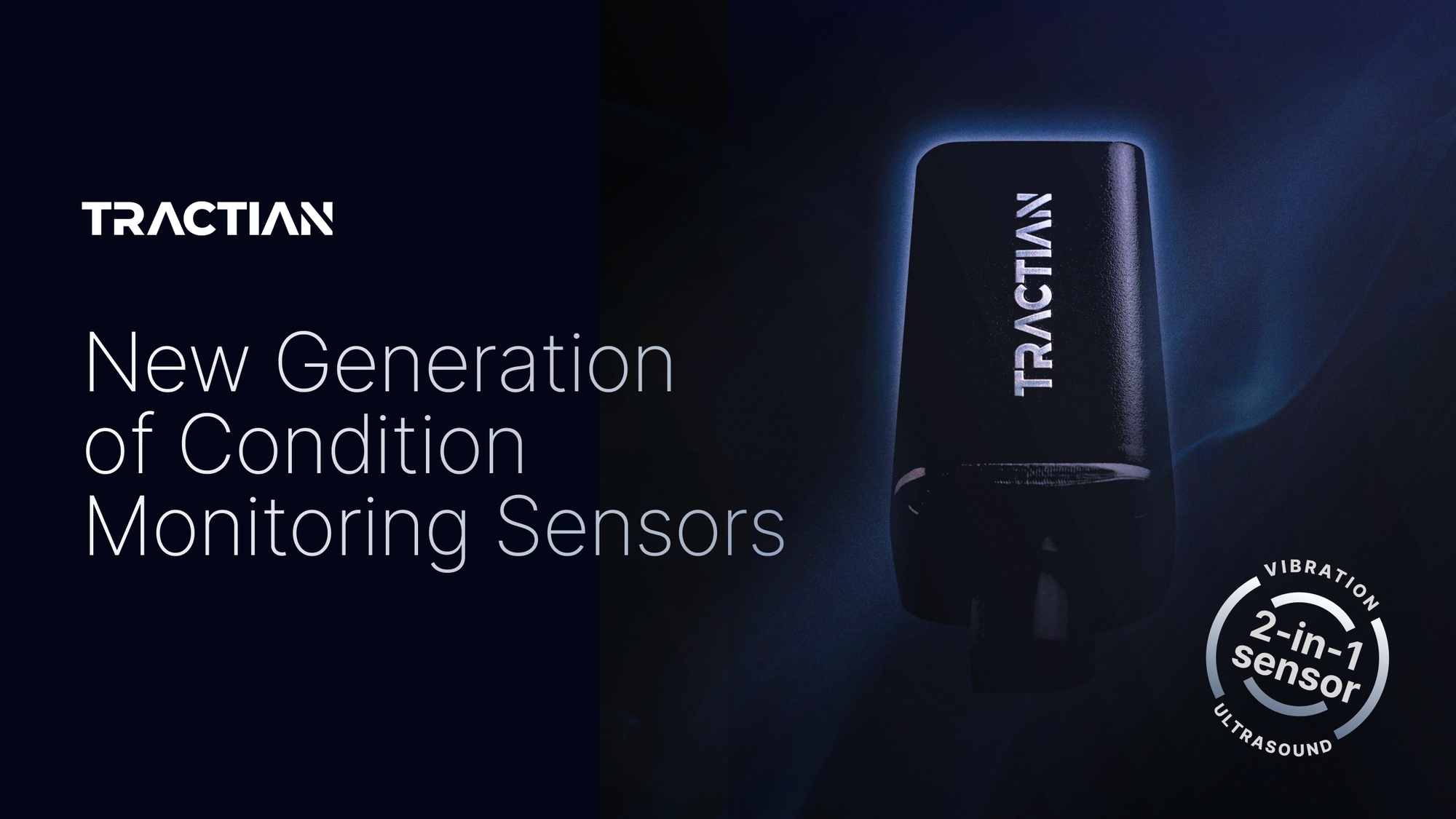
Next-gen Tractian sensors combine vibration, ultrasonic, temperature, and RPM monitoring to help teams detect problems earlier and act with confidence.
For decades, vibration analysis has been the backbone of condition monitoring. It remains the most reliable way to understand machine behavior, track fault progression, and confirm that corrective actions actually worked.
But in practice, many failures still aren’t caught early enough. Some of the earliest indicators of failure, especially lubrication-related issues, don’t always show up clearly until damage has already begun to accelerate.
In fact, industry studies consistently show that up to 80% of premature bearing failures are linked to lubrication issues.
That’s the gap Tractian set out to close.
Today, Tractian is introducing a new generation of condition monitoring by unifying vibration and ultrasound in a single, always-on system designed to detect early-stage faults even sooner.
Handheld-grade precision, plus usability and intelligence
Teams have historically relied on handheld tools to capture high-quality vibration and ultrasound data. The insight was there, but only if you had the time, expertise, and manpower to collect it consistently.
At the same time, many online solutions prioritized convenience over precision, forcing teams to choose between coverage and confidence.
Tractian sensors are lab-tested and field-validated to match the data quality of handheld devices, while operating continuously and automatically. High-fidelity vibration, ultrasonic, temperature, and RPM data are captured without routes or manual intervention, and without sacrificing accuracy.
And it’s built for real-world deployment:
- Guaranteed 3–5 year battery life, even with high-resolution sampling
- Plug-and-play installation with NFC, enabling fast installation and real-time measurements in the field
- LTE connectivity, eliminating reliance on plant Wi-Fi or IT infrastructure
- Safe to use in Hazardous Locations, Class 1 Div I certified
A new generation means removing trade-offs
Tractian Condition Monitoring removes the trade-offs that have forced teams to choose between:
- Early detection vs. scalability
- High-quality data vs. ease of use
- Expert insight vs. day-to-day practicality
By combining high-fidelity vibration and ultrasound in a single, plug-and-play sensor, Tractian makes early-stage failure detection continuous, automated, and actionable, without adding complexity to the maintenance team’s workload.
Vibration is essential for tracking fault progression, confirming severity, and validating repairs. Ultrasound extends visibility further left on the PF curve, especially for lubrication and friction-related issues that would otherwise go unnoticed.
Together, they give teams a more complete picture of machine health, earlier.
Condition-based lubrication, finally practical at scale
With continuous ultrasound built directly into Tractian sensors, lubrication becomes truly condition-based:
- Online lubrication rounds, without handheld devices or fixed schedules
- Real-time feedback while lubricating, so teams know when enough is enough
- Post-action validation to confirm the bearing is back on track
Teams move from guessing to knowing, reducing over-lubrication, under-lubrication, wasted grease, and unnecessary interventions.
From detection to decision, in one system
Detecting issues earlier only matters if teams can act on them. That’s why this new generation of sensors is built for end to end Asset Condition Management (ACM):
- Always-on sensors sample and stream vibration, ultrasonic, temperature, and RPM data automatically - no routes, no static schedules.
- Issues are prioritized by severity, progression, and asset criticality, so teams focus on what actually threatens uptime.
- Patented failure detection models translate raw signals into specific failure modes, root cause context, and clear next steps.
- Post-fix validation and expert support help teams confirm that actions worked and continuously improve reliability outcomes.
This new generation expands detection to more failure modes, across more asset types, without increasing workload. Teams gain earlier, more precise insight into what’s happening across their most critical machines, driving higher uptime, better decisions, and more time back for the work that actually matters.