98% of Plants Are Spending More on Maintenance Tech. 80% Still Can't Act on Their Own Alerts.
Verdantix surveyed 60 industrial leaders and found a contradiction hiding in plain sight: investment in maintenance technology is accelerating, but outcomes are not.
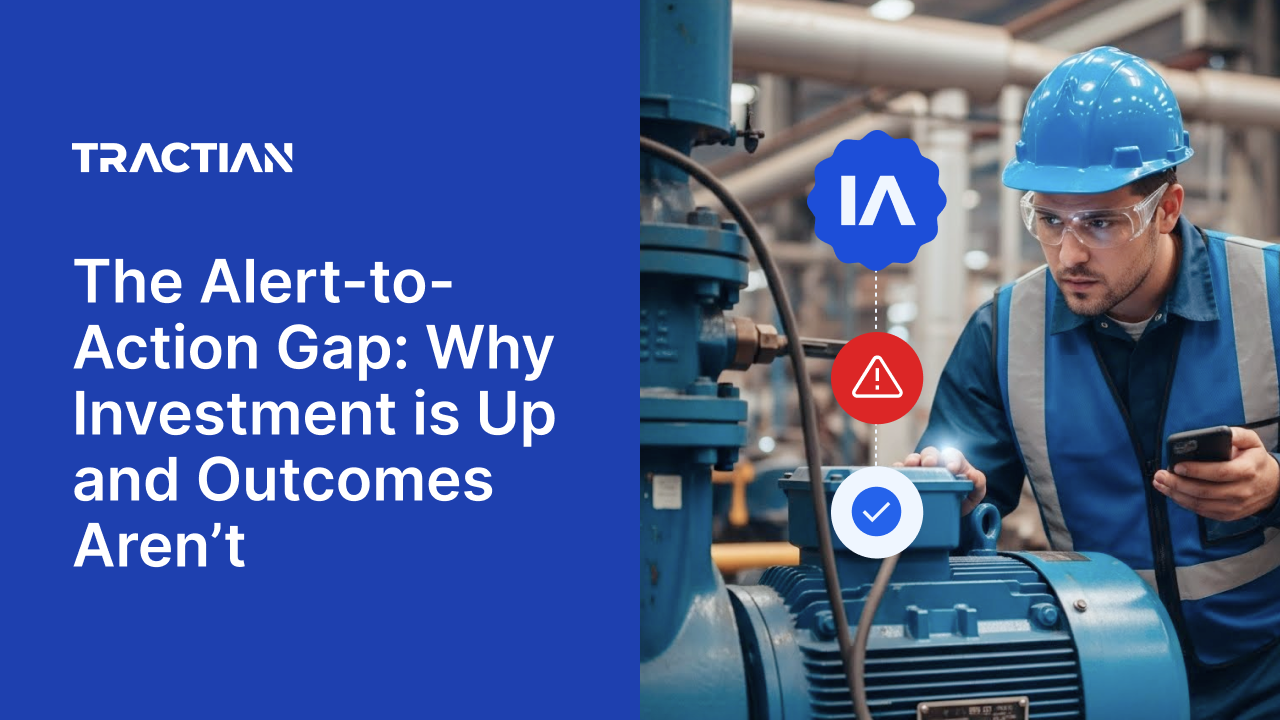
Almost every organization is increasing their condition monitoring budget. And yet, the majority still cannot reliably convert an alert into a maintenance action. The data doesn't show a funding problem. It shows an execution problem and it's more common than most maintenance teams want to admit.
This is what happens when the industry buys tools faster than it builds the workflows to use them.
Where Industrial Maintenance Is Actually Headed
The shift from reactive to predictive maintenance has been "the future" for over a decade. It's no longer the future. It's the dividing line.
Organizations that cracked it aren't just reducing unplanned downtime. They're restructuring how maintenance teams operate: fewer emergency callouts, more planned interventions, better parts availability, and maintenance engineers spending their time on decisions rather than data collection. The operational model changes.
The organizations still struggling are mostly stuck in the same place: they have sensors generating data, dashboards showing signals, and a team that doesn't fully trust either. The gap isn't technology. It's the layer between signal and action and who owns it, what triggers a response, and whether the system fits how the plant actually runs.
What Verdantix found is that this gap is measurable, it's common, and the leaders who closed it followed a recognizable pattern. That pattern is what's worth understanding right now, because the window to get ahead of it is narrowing. The industry is not going back to manual rounds and paper-based maintenance tracking. The question is whether your program is built for where operations are going, or where they've been.
The Numbers Don't Lie,They Just Need Context
Verdantix is an independent research and advisory firm with 15+ years covering industrial and operational technology. They don't sell software. They study it. When they model ROI, the numbers belong to them.
Here's what their model found for a single model manufacturer running Tractian:
- 401% three-year ROI
- 8-month break-even
- $5.14M in three-year benefits
- $3.3M net present value
Those figures are built line by line,maintenance hours recovered, failures prevented, parts saved, downtime eliminated. Not estimated. Modeled.
The ROI exists. The question the survey of 60 industry leaders answers is: why aren't more operations capturing it?
Register Now: Live Webinar with the Verdantix Analysts
On Thursday, July 30th at 2PM EST, Josh Graessle, Senior Manager at Verdantix, is walking through the research live. Not a slide deck summary. The actual methodology, the actual findings, and a live Q&A where you can put your questions directly to the researchers who ran the study.
This is a 60-minute virtual workshop. It's free. There are no seat limits. Every attendee gets the Verdantix reports.
What the Research Actually Covers
The webinar isn't a product demo. It's a breakdown of research that reveals where the industry is leaving money on the table.
Four things will be covered:
The ROI model, line by line. How the 401% figure was built. What drives the break-even at eight months. Where the $5.14M in benefits comes from and which operational inputs matter most.
The alert-to-action problem. 98% of organizations are increasing investment. 80% still can't turn alerts into reliable action. The survey breaks down exactly where value leaks out, and it's not where most teams assume.
What separates the leaders. The highest-performing programs don't just have better sensors. They embed condition monitoring into existing workflows. The research shows what that looks like in practice and where AI actually helps versus just adding another dashboard nobody checks.
Live Q&A. Direct questions to the analysts who built the study. Bring your skeptics. This is the kind of session that's worth forwarding to your whole maintenance team, each person registers individually, but there's no limit on who can join.
Why This Matters Right Now
The gap between the organizations capturing returns from condition monitoring and those still struggling to act on alerts is not closing on its own. The survey data makes that clear.
The teams pulling ahead aren't doing something radically different. They've solved the workflow problem, the step between "the system flagged something" and "a technician acted on it." That's where the ROI lives or dies.
On July 30th, 2026, Verdantix is showing exactly where that gap is and what the leaders did to close it.