By Alex Vedan, Product Marketing Director at Tractian
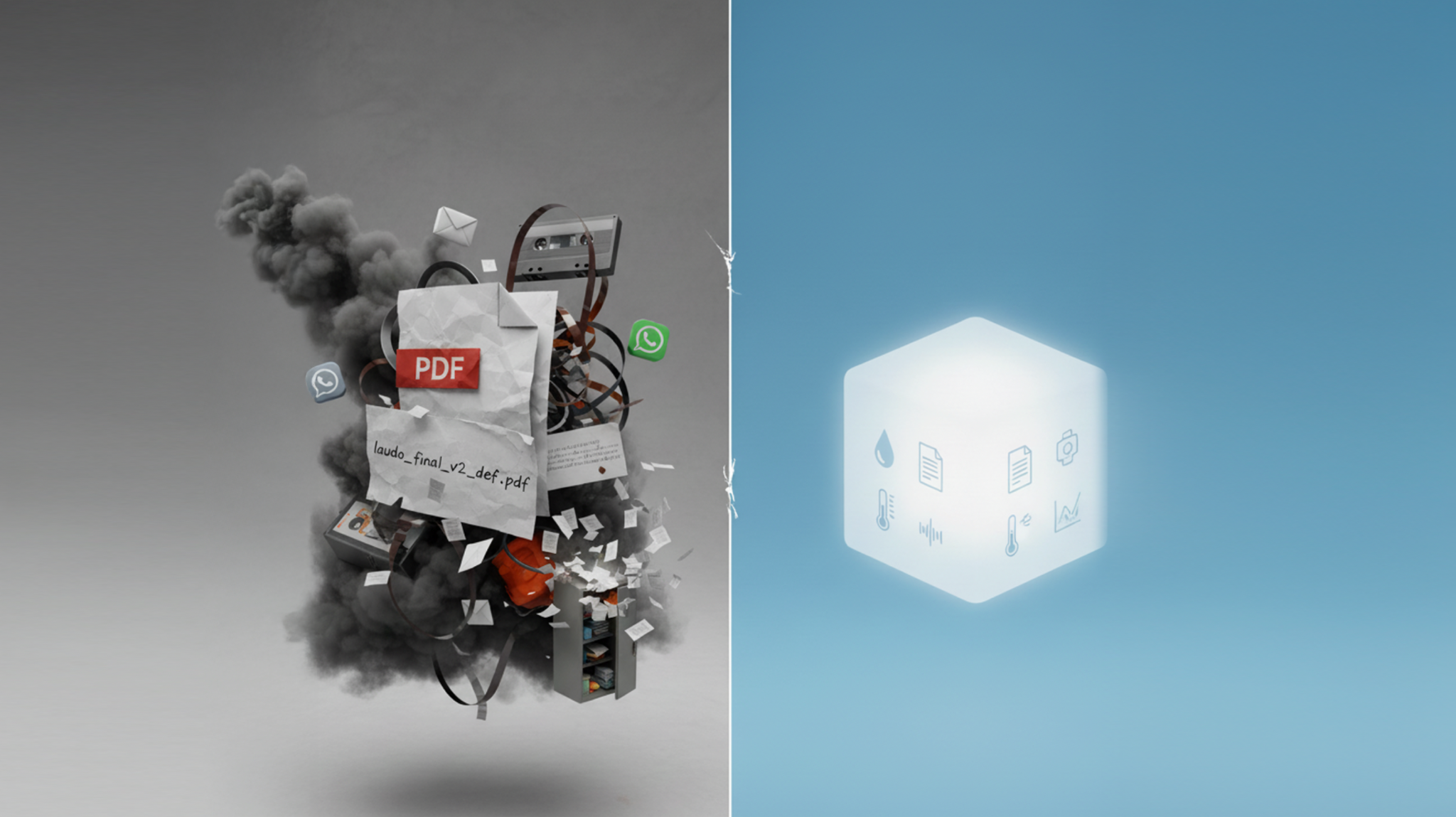
In an ideal world, technical documentation would help maintenance teams make better decisions. In the real world, it often does the opposite. Anyone who works in a plant knows the drill: vibration reports come from one vendor, ultrasound from another, oil analysis by email, thermography over WhatsApp, internal inspections buried in some forgotten folder on a local machine. Everything exists, but nothing lives in the same place.
That’s where the real problem starts. What’s supposed to bring clarity ends up creating noise. Maintenance doesn’t suffer from a lack of data. It suffers because teams can’t find, compare, and actually use the right information, at the right time, in the right context. That’s exactly the problem Analyses is built to solve.
If reliability depends on what’s lost in someone’s inbox or a text thread, it doesn’t really exist
That might sound harsh, but it’s the reality of many operations today. A critical report sits in the inbox of someone on vacation. An anomaly was flagged in a PDF no one opened. Two reports were never compared because they lived in different folders. A past intervention never made it into the asset history because the document wasn’t attached or ended up buried in a message thread.
Failures don’t start at the machine. They start with disorganized information.
Analyses was built to remove this invisible bottleneck and turn documentation chaos into a single, traceable flow.
Reports aren’t missing. Time to find and understand them is.
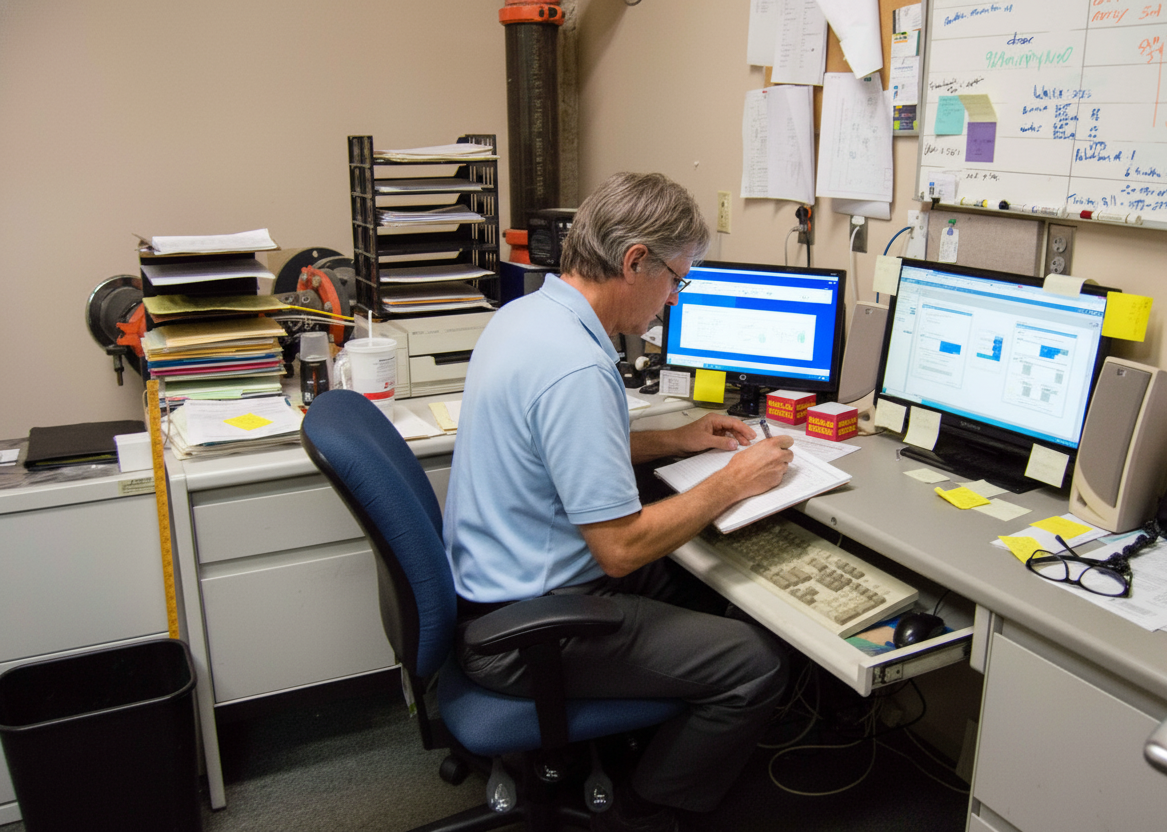
In practice, documentation often looks like a closet no one wants to open. Old folders, duplicate files, manuals no one remembers downloading, reports named things like “oil-analysis-final_report_v2-february.pdf.” It’s “organized” only for the person who saved it.
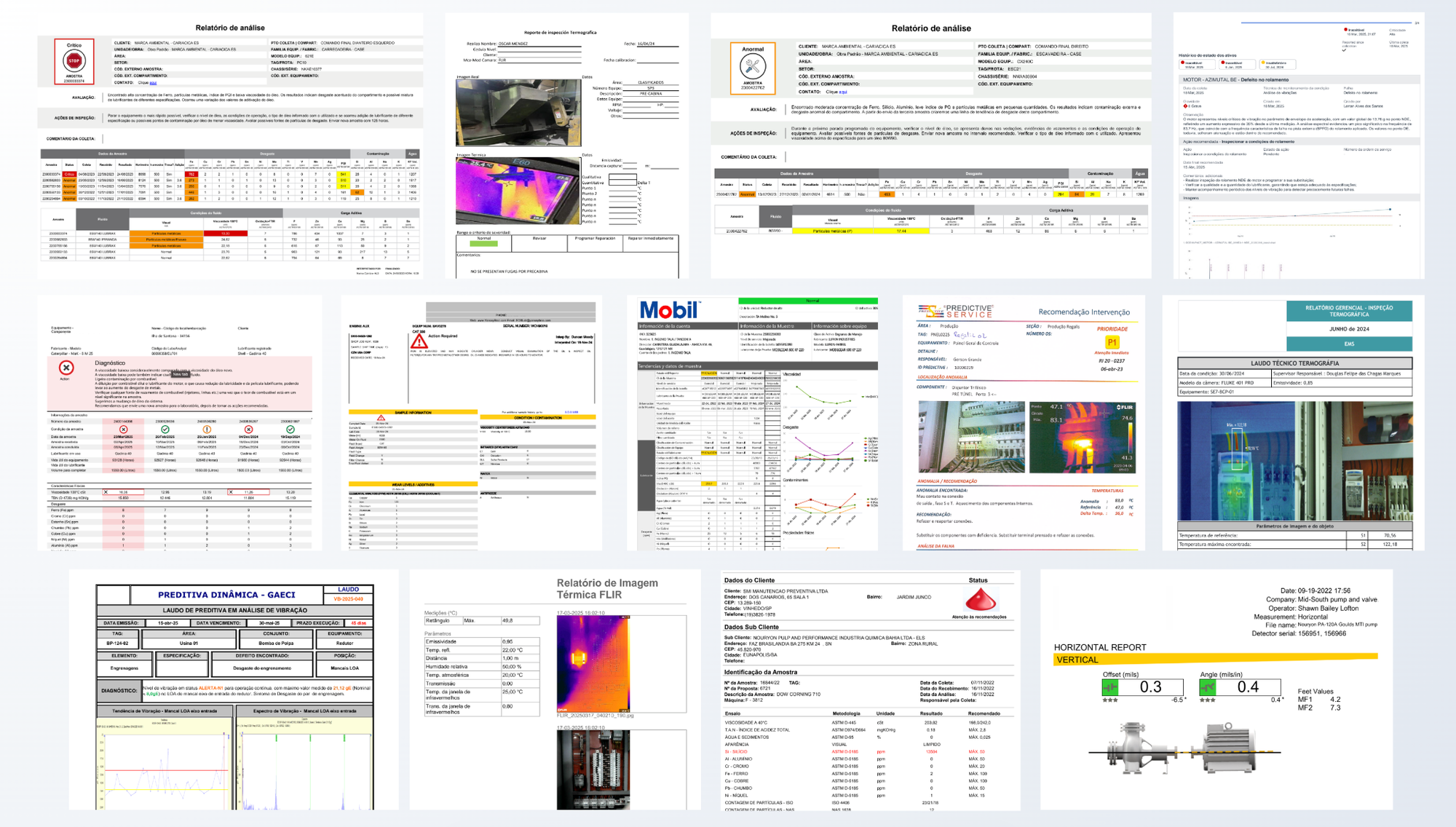
Every time a PDF arrives, two things need to happen: someone has to read it, and someone has to interpret it. The problem is that formats vary, vendors write differently, and terminology changes from one report to the next. The result is predictable. Each analyst interprets things their own way, and consistency disappears.
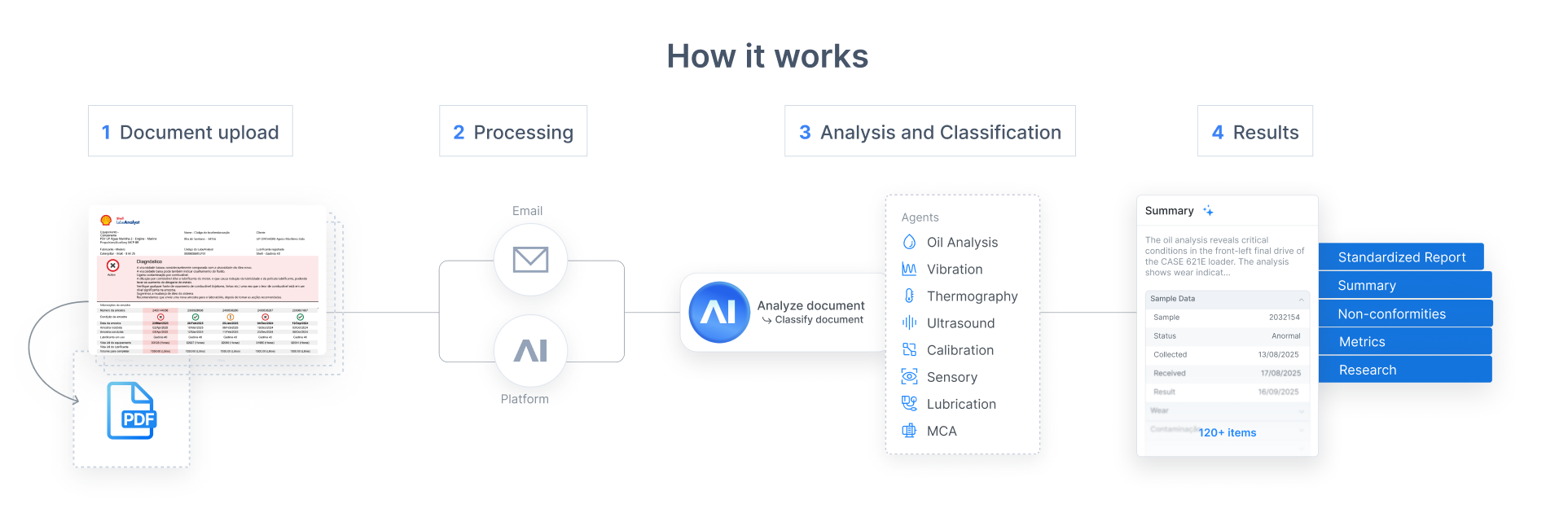
Analyses fixes this by standardizing interpretation. It extracts anomalies, identifies severity levels, highlights what’s critical, detects degradation patterns, connects everything to the asset’s history, and surfaces aligned recommendations. It turns a pile of PDFs into a living, reliable timeline that’s actually ready to drive action.
One place for every report tied to your assets
In most maintenance routines, reports are analyzed in isolation. No one sees the full story of the machine.
Analyses changes that. It creates a single asset workspace where vibration, ultrasound, thermography, oil analysis, internal inspections, vendor documents, conclusions, alerts, history, and interventions all live together in one clear timeline. Decisions stop being fragmented and start being based on full context, including insights that were previously hidden.
What no one likes to say: third parties often make this harder
External vendors deliver critical information. The problem is that each one structuresand writes reports in their own way. One sends a 30-page PDF with tiny tables.nother uses screenshots and all caps text. A third mixes inconsistent terminology. A fourth provides no severity, no history, no recommendation.
Instead of a workflow, you end up with multiple languages describing the same asset. That inconsistency is risky. When reports don’t speak the same language, that coststime, creates uncertainty, and increases exposure.
When all sides of the story come together, answers show up faster
With Analyses, every document becomes actionable intelligence, not a bureaucratic obligation. Reports are interpreted automatically, insights are surfaced in a standardized way, historical comparisons happen naturally, and anomalies stop slipping through the cracks. Engineers and technicians see the full context of the asset before deciding what to do next.
Analyses no longer depends on “that one person who understands this type of report.” The expertise lives in the system, not just in someone’s head. That reduces risk, speeds up response time, and brings predictability back to operations.
Why we built Analyses
We built this because modern maintenance doesn't break only at the machine. It breaks at the PDF no one opened. The report no one found. The poorly written analysis, the forgotten email, the missing standard, the noise between teams, the time lost trying to make sense of fragmented information. Almost every failure shows up in the documentation first. The problem is that documentation is always in the wrong place.
Analyses makes sure none of that happens again. It centralizes, interprets, connects, and translates documents into something operations can actually use to make better decisions, faster.
The next step for reliability
Industry talks a lot about being data-driven but continues operating as if data were random PDFs and attachments scattered across emails, WhatsApp, spreadsheets, and local drives. Analyses turns documents into a living knowledge base, contextualized, standardized, and ready for action.
It brings the clarity to organize, the speed to interpret, and the confidence to make the right call. That's the next step for industrial reliability.