By Alex Vedan, Director of Product Marketing at Tractian
You register a new motor. The model field says "ABB M3BP 180HP." The technical sheet has fourteen fields. You fill in three, because that's what the nameplate gives you and the procurement email doesn't have the rest. The sensor goes live anyway. It'll figure it out, right?
This is how most industrial assets enter a predictive maintenance system. In SAP, in EAMs, in whatever system of record the plant runs on. The registration process needs to move forward, so the team works with whatever is available. That incomplete record then becomes the source of truth downstream.
This matters because reliable predictive maintenance depends on two things: what the sensor observes and what the system already knows about the asset. Most operations have invested heavily in the first. The second is still mostly blank.
If the technical sheet is blank, what exactly is the system benchmarking against?
The registration problem is structural. It follows the same pattern across all plants, regardless of size or sector.
OEM documentation is essential for all of this, but accessing and managing it has never been straightforward.
Asset records are built manually. Quality depends on who did the setup, what documentation they could access, and how much time they had before the next installation. The person who registers the asset is rarely the person who will monitor it. The person who monitors it inherits whatever was entered, with no easy way to verify or complete it.
Manufacturer specs live across emails, shared drives, and procurement portals that were never designed for maintenance teams. Quick exercise: ask the team where the documentation lives and you'll get three different answers. The reliability engineer has a folder. The technician has an iMessage thread. The procurement analyst has an email from 2022 with a ZIP attachment that may or may not be the right revision.
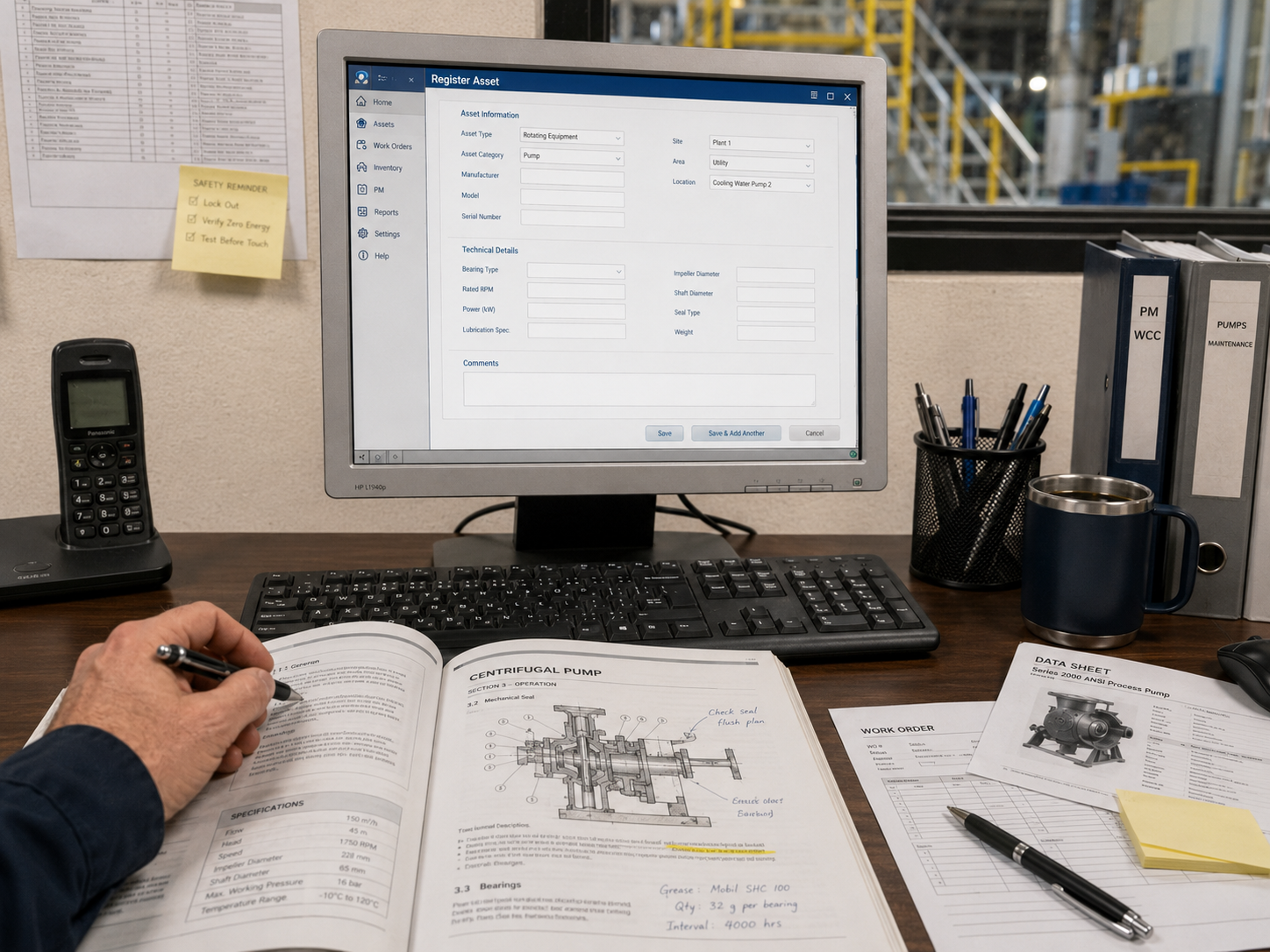
Finding the right document takes longer than filling in the fields. So the fields stay blank.
When they do, the downstream effects compound. Alerts fire without enough context for the team to assess severity. Sensor calibration references incomplete or assumed baselines instead of documented specs.
The gap between observed behavior and expected behavior is where condition monitoring delivers the most value.
“When expected behavior isn't defined, the system is interpreting a signal against silence.”
Sensors keep getting smarter. What they know about each asset hasn’t
No matter how advanced your sensors or algorithms are, the quality of your monitoring depends on one foundational thing: how much the system actually knows about each asset.
A sensor with clean signal and a blank technical sheet still produces valuable data, but with a weaker reference point. The system sees behavior, but it has less asset-specific context to benchmark that behavior properly. It doesn't have the manufacturer's rated operating parameters, the bearing model, the expected vibration profile, or the recommended service intervals. Every diagnostic becomes a comparison against incomplete assumptions instead of documented specs.
Everyone in the industry talks about signal quality. Nobody talks about reference quality. That's where the real gap sits.
Condition monitoring at its most precise requires two layers working together: OEM knowledge, which defines how the asset should behave; and field data, which captures how it actually does.
When both exist in the same record, the deviation between expected and observed behavior becomes the most reliable signal a team can act on.
The industry needs this combination as a standard practice, but in many operations, those layers still live separately.
We know this because we measured it
We ran an internal analysis across 26,571 monitored assets in our monitoring base. Three findings stood out.
- 71% of monitored assets lack sufficient manufacturer metadata in their registration records: asset records often do not include enough manufacturer-level detail to connect them automatically to the right documentation.
- More than half of identifiable assets belong to manufacturers whose documentation is already structured and available: The documentation exists. The opportunity is connecting it to the asset record at the moment teams need it.
- Successfully matched assets are concentrated across a focused set of major manufacturers: That concentration makes the opportunity more practical. A structured library focused on high-coverage manufacturers can improve context across a large share of monitored assets.
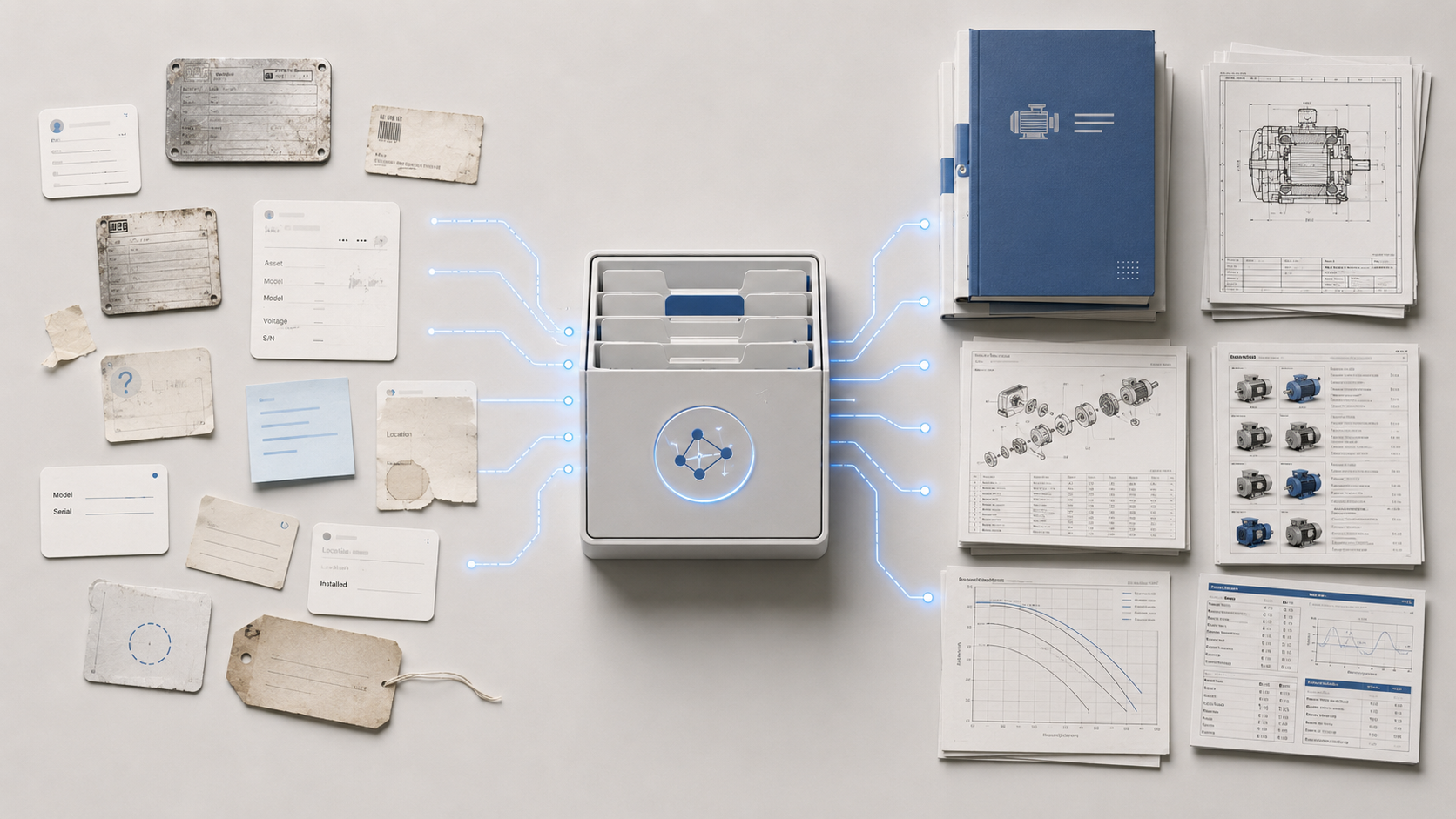
Taken together, the findings are clear: the industry does not need more scattered documentation. It needs a structured layer that connects asset registration data to OEM knowledge. That is the role of Asset Library.
What changes when the system actually knows the asset?
When the asset record carries OEM context, the entire downstream workflow shifts.
Sensors monitor against real manufacturer baselines instead of assumed parameters. Alerts arrive with enough context to assess severity based on documented specs. Diagnostics become more defensible because the reference point lives in the record, not in someone’s head. Maintenance recommendations tie back to manufacturer specifications, spare part numbers, and documented procedures.
Asset Library is the feature. Asset Intelligence is the result.
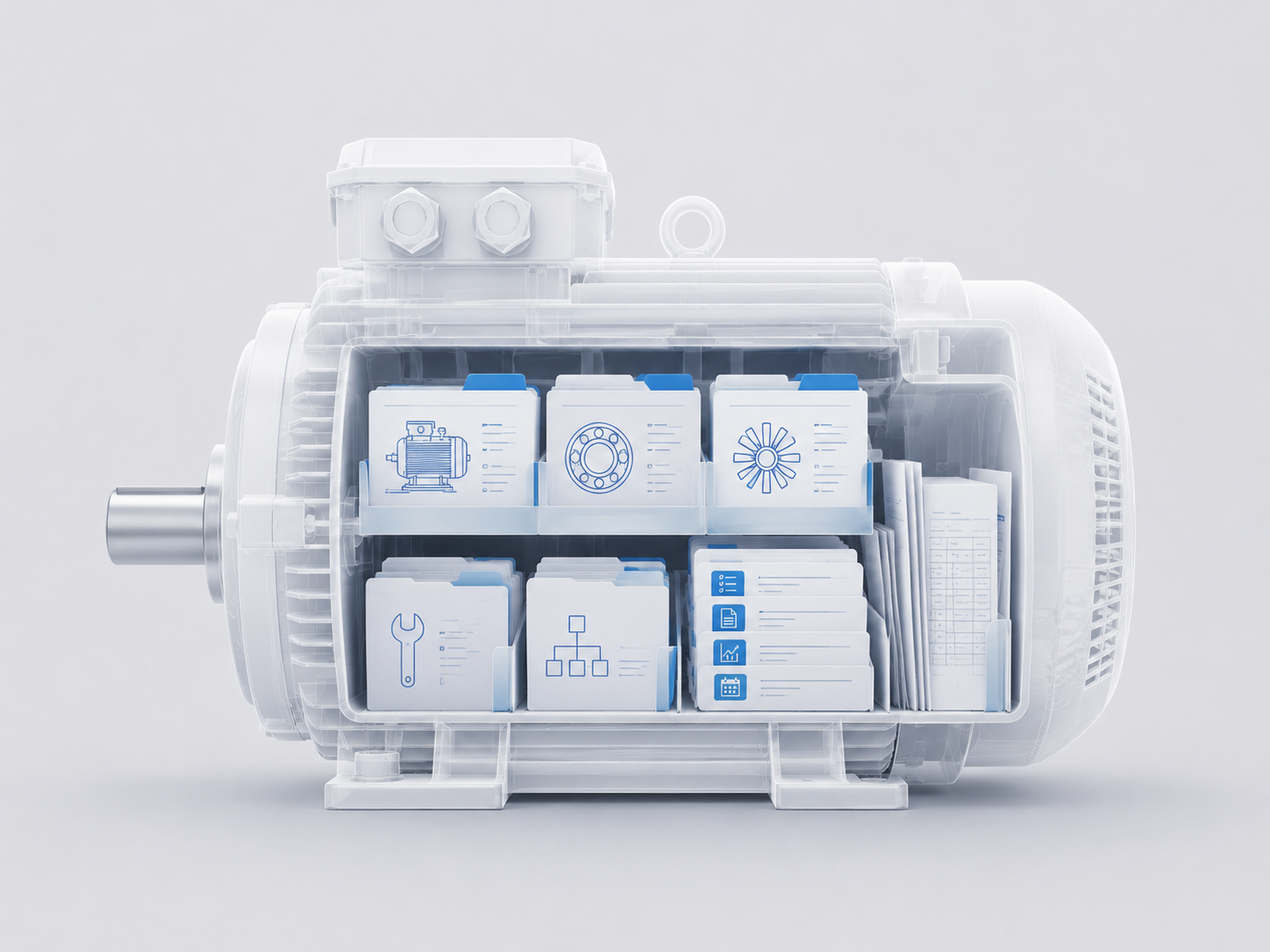
- Asset Library brings structured OEM context into the asset record.
- Asset Intelligence is what that context makes possible: more reliable monitoring, sharper diagnostics, and better maintenance decisions.
Bring OEM Context Into Your Asset Records
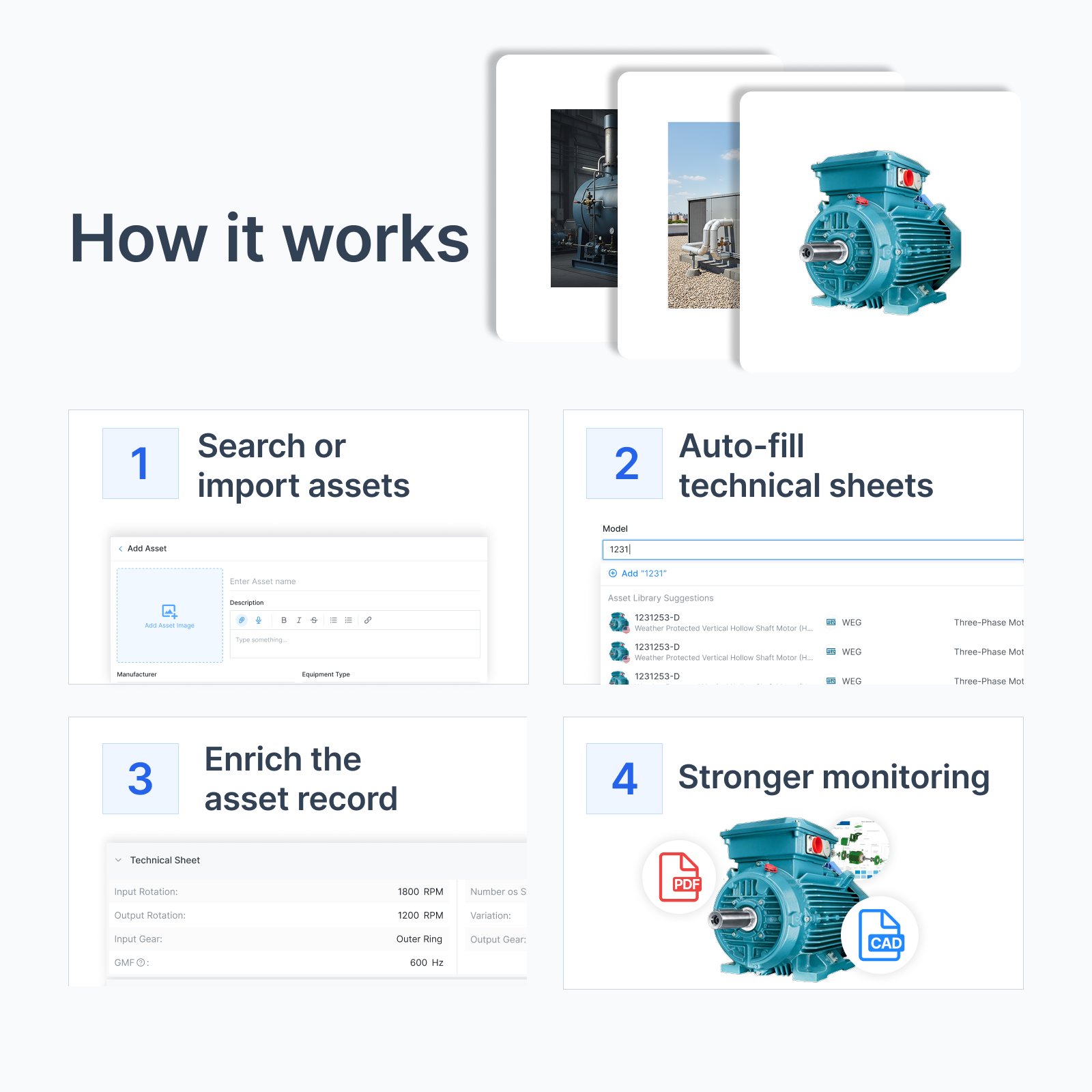
The best way to understand Asset Library is to see it working inside an actual asset workflow. How a technical sheet gets populated. How OEM documentation connects to the record. How that context gives monitoring a better reference point from day one. If your team is dealing with incomplete asset records or scattered manufacturer documentation, talk to us and we’ll show you how Asset Library works.