
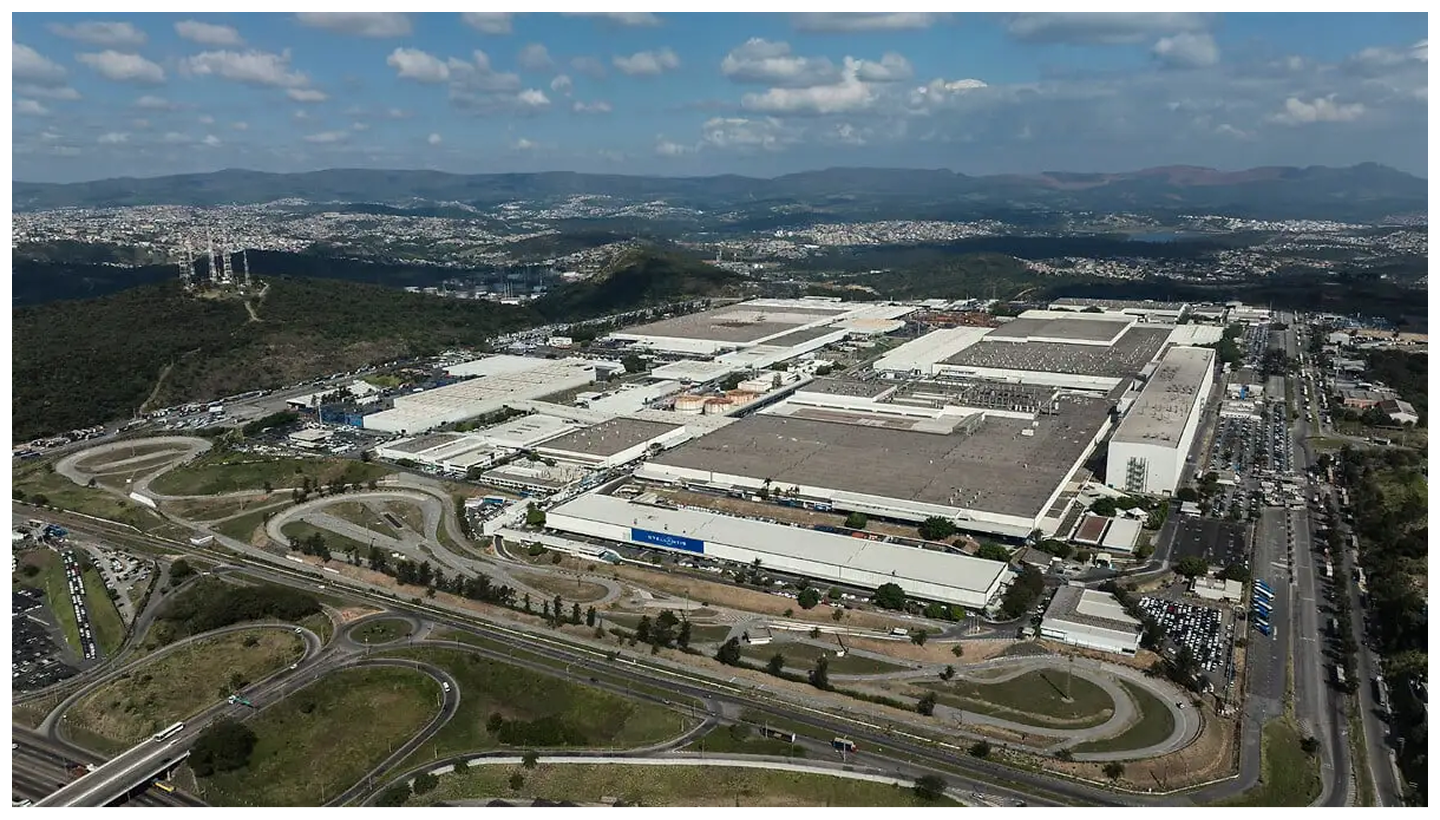
At one of its production plants, Stellantis launched a groundbreaking energy optimization project on the automotive welding line. The initiative combined real-time utility monitoring with data analysis to reduce energy usage at each welding point, without compromising weld quality.
The result was a more stable, sustainable process with significant productivity gains, reinforcing the plant’s culture of continuous improvement. The project achieved a 17% reduction in energy consumption per welding point and is now being scaled to 134 machines, with an estimated savings potential of over 1 GWh annually.
The Challenge
With 665 welding robots in operation, the team lacked individual monitoring tools to track energy usage or detect anomalies. Small fluctuations in current, pressure, or cooling could lead to wasted energy or premature component wear. The challenge was to bring visibility and stability to a process that is both highly sensitive and mission-critical without sacrificing performance.
The Solution
Stellantis deployed Tractian’s energy monitoring sensors directly to each robot’s control panel, enabling real-time tracking of electrical and thermal behavior for every individual unit.
The technical team began comparing performance across similar robots, spotting deviations and correcting settings that exceeded optimal thresholds. Using the PDCA methodology, they stabilized the process and reduced energy consumption while maintaining perfect weld quality.
Proof Point: From Detection to Action
During the pilot, one robot kept shutting down unexpectedly, despite multiple component replacements. Using Tractian’s real-time energy data, the team tracked the electrical signature and discovered a recurring drop in one of the three power phases.
The issue? A faulty fuse terminal connection. Once fixed, the shutdowns stopped entirely, preventing further unplanned downtime.

Impact and Outcomes
Real-time monitoring delivered measurable outcomes for Stellantis:
- 17% reduction in energy consumption per welding point
- Estimated savings of 1 GWh/year
- Over $70,000 saved during rollout to additional machines